Category Archives: Uncategorized

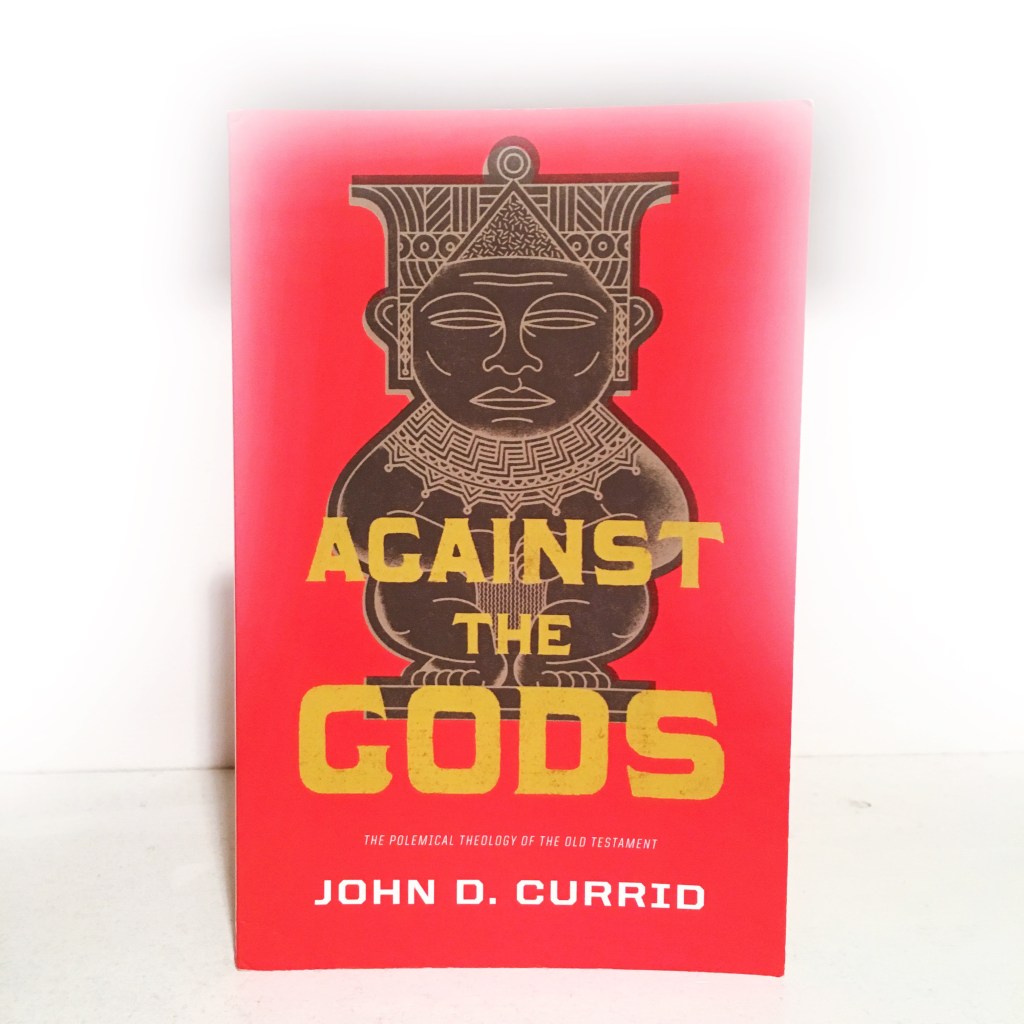
Against The Gods | Book Review

The courthouse of scholarship puts the Bible under examination. This examination explores the relationship between the Old Testament writings and its influence from ancient Near Eastern neighbors. The prosecution brings questions like: Did biblical authors plagiarize from surrounding cultures? Is the Bible guilty of “crass plagiarism”?

John D. Currid, Ph.D, professor of Old Testament at RTS, addresses these questions in his book Against the Gods: the Polemical Theology of the Old Testament. The main idea of his book is to explore the relationship between the literature of the ancient Near East with the Old Testament writings and to argue that Scripture is not in danger of plagiarism. Furthermore he argues that the Old Testament is not just another expression of “ancient Near East literature that is grounded in myth, legend, and folklore” (9). Currid offers a rebuttal in the form of polemical theology. In this theology, the “biblical writers use thought form and common stories in the Near Eastern culture, but they have a radically different meaning” (25). Polemical theology rejects all false gods and testifies for a monotheistic orthodoxy.

In each chapter, Currid helped me better understand the Old Testament as he develops his main idea. I appreciated that Currid was mildly technical as he built a case for polemical theology, but his book was not overly burdensome. Chapter 1 states a brief history of ancient Near Eastern studies. Currid brings out tablets, excavations, and language translations as evidence from regions such as Mesopotamia, Egypt, Assyria, and Babylon. Currid labors to reconstruct history in order for readers to see the similarities as well as the foundational differences.

Chapter 2 brings the nature of polemical thought and writing to the witness stand. In his use of polemical expressions and polemical motifs, Currid “highlights the distinctiveness and uniqueness of the Hebrew worldview over against the dominant setting of the rest of the ancient Near East” (32).

Currid focuses on narratives in chapters 3-7. Currid questions the relationship between Genesis 1 and other ancient Near Eastern creation accounts in chapter 3. His main question is whether or not the Hebrew creation account provides distinct thought at its very core (35).

I appreciated that Currid showed how the Bible differs from ancient Near Eastern accounts in three ways. First, the nature of the creator is different. The Hebrews have one God versus the polytheism of the ancient Near East (40). Second, “The purpose of humanity’s creation is distinct” (42). Men were not made to labor for the gods as in the Mesopotamian myths. Third, the biblical writers have no interest in theogony. The Hebrews believed that “the universe is God’s creation, but it is not God” (40). God created the entire universe ex nihilo, thus arguing for Yahweh’s omnipotence, sovereignty, and in-comparability (43).

In chapter 4 the Noahic Deluge in Genesis 6-9 is brought in as an appeal in order to consider differing worldviews. Noah’s flood story is compared to the Sumerian Flood Story, The Epic of Atrahasis, The Epic of Gilgamesh, Atrahasis at Ugarit, Berossos, and a flood account in Egypt. Many similarities exist, but “the differences that exist are not merely details of the text; they are a the deeper level of worldview, theology, and belief” (57).

Chapter 5 offers a defense for polemical theology by exploring the story of Joseph, the tale of the two brothers, and the “spurned seductress” motif. While the “spurned seductress” is a recurring theme in the ancient Near Eastern literature, the analysis shows that the biblical narrative is not presented as “folklore or as mythic” (73). The biblical genre is historical narrative, thus serving as a polemic against the ancient Near Eastern folk tales (73).

Chapter 6 explores “the birth of the deliverer.” Similarities exist between: Moses’ birth story, and The Birth of Horus narrative, but I appreciate how Currid notes that the biblical text differs because it “does not take place in the mythic or legendary sphere” (85). God really delivers people from great peril. “Myth becomes fact” (85).

Chapter 7 presents the flights of Sinuhe and Moses. The two stories share a plot line, but again the endings differ and offer great insights for the church today. For example, Currid notes that while Sinuhe is a true son of Egypt, Moses is not. “By use of a polemical ending, the author taunts Egypt and her nationalistic fervor: Moses didn’t crave Egypt or the kingly deity; he longs only to serve Yahweh” (95).

Chapter 8 shows a contest over the divine epithet “I Am that I Am.” Both Exodus 3 and the Egyptian Book of the Heavenly Cow seek to answer the question: who is “I Am that I Am”? And where the Egyptians attempt to mock the Hebrew God, the biblical author shows that “that name truly belongs to the God of the Hebrews. He uniquely is the eternal, sovereign God of the universe!” (108).

Chapter 9 opened up new Old Testament understanding for me because it addresses the symbol of authority, power, and sovereignty—the staff or rod of Moses. The whole episode in Exodus is a matter of theology. “It was a question of who was the one true God.” (118). I did not know that in Egypt the staff was associated with the Cult of Osiris and was seen as “imbued with magic or the power of the gods” (116). The irony is that the Hebrew leaders possessed a rod and used it to humiliate and defeat the Egyptians (117). Currid notes that the “real power of the universe was not in the staff but in the god. Yahweh was victorious, not because of the type of rod that was used, but by his great power and sovereignty” (119).

Chapter 10 investigates the parting of the waters. The splitting of the Red Sea is placed against The Third Tale. The similarities are clear: two “spiritual leaders divide a deep body of water through supernatural means” (125). The Egyptian story is not historical literature, whereas the Hebrew story is historical fact. Even the language used in the Exodus account is a polemical play against Pharaoh’s power as Yahweh is shown to be greater (129). Again this chapter brought new insights about the OT.

In chapter 11 I found myself in the jury box. What would the verdict be? The final bit of evidence presented was concerning Canaanite motifs. The head of the Canaanite pantheon, “El” is paralleled with Yahweh, but the biblical text ends up being a polemic against the Baal and Canaanite religion. Baal is not the one who thunders; “the God of glory thunders” (Ps. 29:3). The point is to exalt Yahweh and to ascribe glory only to his name.

The new insights I found in this book build a strong case for Yahweh’s sovereignty. I believe Against the Gods will aid my future ministry. Not only will polemic theology help in explaining the OT, God’s oneness and sovereignty will help in teaching opportunities where so many people are looking to “other things” to be their god. As a critique, I wish the author had clarified whether the Hebrew writers consciously penned their narratives as a polemic against other religions. I was left questioning whether that was intentional or just a secondary aspect. I also wish Currid would have arranged his material to emphasize the differences of views more clearly. Additionally, Currid could have been more explicit in stating that the Old Testament is not primarily a product of the surrounding ANE cultures. Currid also could have highlighted God’s character that transcends culture more. Overall Currid’s book was great a great resource for investigating this subject.

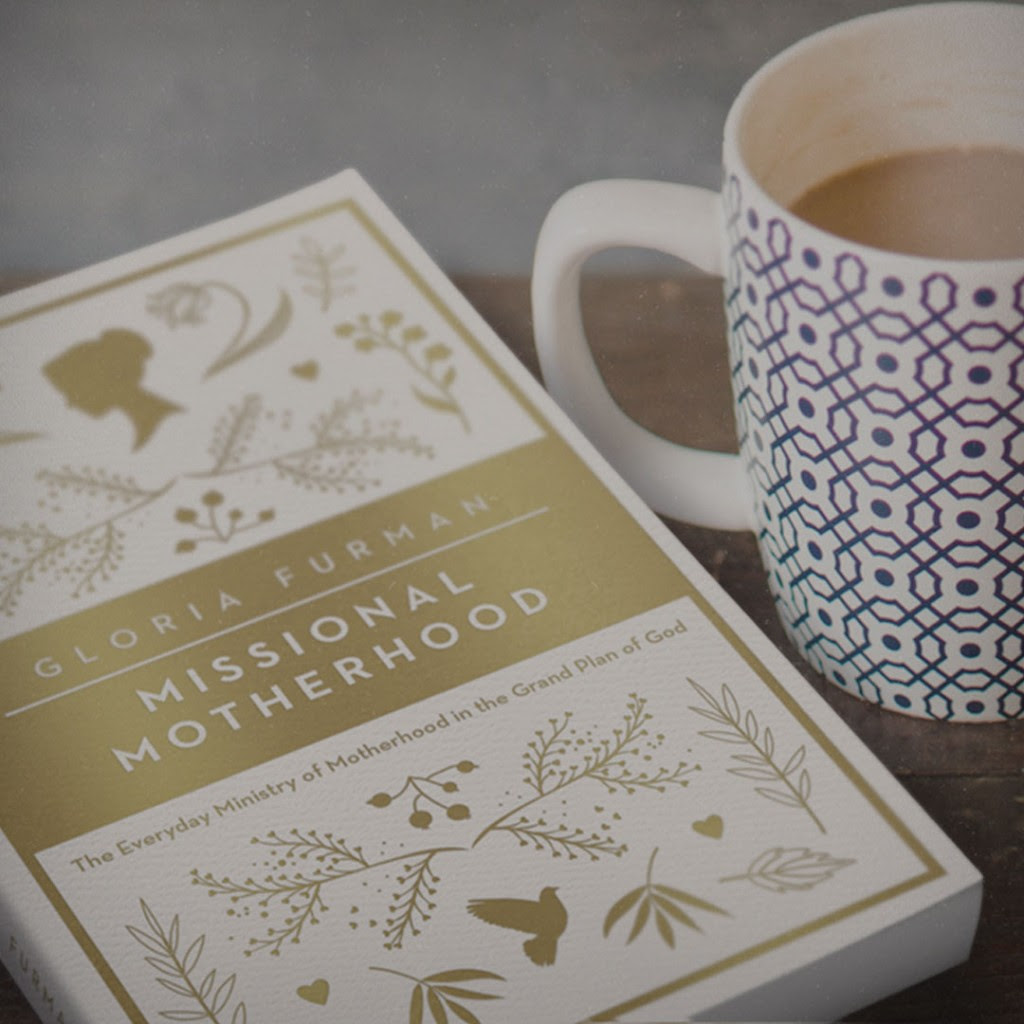
Missional Motherhood | Book Review

Even though mothering can be demanding, why is it so easy to parent in a self-focused way? How do mothers still manage to place themselves back in the center of the universe, even while serving?

Gloria Furman addresses this problem in her newest book and aims to move “self” back into its proper place in God’s grand story of redemption.

Missional Motherhood: The Everyday Ministry of Motherhood in the Grand Plan of God (Published May 31,2016) takes us where few motherhood books have gone before. This book is not a practical “How to” book that informs parenting. Rather it offers a broader vision: God’s grand story. Furman leads mothers on a journey through Biblical history. It centers the mothering world around God and places the everyday mom in the middle of redemption history.

Missional Motherhood is divided into two sections: “Motherhood in the Grand Plan of God: Nurturing Life in the Face of Death” and “The Everyday Ministry of Motherhood: God, Therefore, and Mother Disciples.”

The first section leads the reader through God’s plan of salvation (all the way through the Old Testament). Furman offers a helpful overview of Biblical theology. This section beautifully reminds moms where they fit into God’s story. It was a refreshing reminder that the world doesn’t revolve around self, but there is a much grander plan at work. It is a significant work. Moms need to know that.

The second section points to Christ—His life, death, and resurrection. Jesus changes everything about motherhood. Christ is the creator of motherhood and it exists for His glory.

Both sections are written to mothers, but Furman broadly includes women who may not have biological children. The next generation needs nurturers. They need Gospel disciple-making women to lead and guide them. This is far reaching and includes more women than just the ones having biological children.

This book is deep and rich and offers mothers a beautiful and compelling vision for disciplining the next generation. Overall I would recommend this book. It is a great overview of Biblical theology and encourages women (single, married, with or without children) to nurture life in the face of death.

Gospel Eldership | Book Review

In various ways, leaders will emerge in every church. And most pastors want to be intentional about developing and shaping them. Pastors want and church members need men rooted and grounded in the gospel so they can lead the church well. The healthiest churches I know are led by men who are treasuring Christ and are captured and transformed by the gospel.

Church leadership is no small task. And it requires more than just good management. Thune says, “If the gospel truly is “the power of God for salvation” (Roman 1:16), and is constantly “bearing fruit and growing” within us (Colossians 1:6), then each elder must be strong in the gospel.” That is the vision and goal of Robert H. Thune’s new book Gospel Eldership coming out on April 4, 2016.

Gospel Eldership walks future leaders (or current elders) through the biblical concept of servant leadership and stresses the importance of character development before looking at the specific duties of elders. This books helps men see their own sin (or “heart idolatry” as Thune calls it) and helps apply the good news of the Gospel to it. Thune aims to see men develop gospel skillfulness so they can swiftly, effectively, and clearly apply the gospel to others. “Gospel Eldership is designed to intentionally raise up the type of men who can and should lead the church.”

I admire the fact that Gospel Eldership treats the role of elder carefully and biblically and is written from a theologically complementarian viewpoint. That simply means that God designed men and women to complement each other. Men and women are equal in dignity, value and worth, but have different roles in the home and in the church. And while I am a woman reading this book, and I will never be an elder, I enjoyed reading this because it brought new insight about the role. And I am inspired to help, support, submit to, and pray for the elders in my church.

Thune’s book offers 10- lessons that combine theological training with spiritual formation in order to share future leaders at the heart level. And it has practical exercises to help put concepts to work in real life situations.

One aspect of Gospel Eldership that I appreciate is that it can be used in one- on-one discipleship or in a small group setting. This book is appropriate for use in any church- from the smallest to the largest ones.

The author, Robert H. Thune is the founding pastor of Coram Deo Church in Omaha, Nebraska. He has coauthored The Gospel-Centered Life and the Gospel-Centered Community. Bob holds degrees from the University of Oklahoma and Reformed Theological Seminary. He and his wife Leigh are the parents of four energetic children. In addition to his work at Coram Deo, he coaches and trains church planters through the Acts 29 Network.

I would recommend this book, because it helped me better understand the role of an elder and I believe it will serve the body of Christ as new leaders are being raised up. When I set this book down after reading it, I was incredibly grateful for the the elders that serve at my church. I have seen much of what Thune talks about modeled in my own church. This book also stirred me up to pray for the elders in my local church because Gosepel Eldership brought fresh insight to many of the things they face on a daily basis.

Pre-order Gospel Eldership before April 4, 2016 and you can get 40% the retail price! That’s only $8.99.

Rid of My Disgrace | Book Review

I wish there were no need for books like Rid of My Disgrace. I wish there were no such thing as sexual assault. But the ugly truth is that sexual assault does exist, and it is way too common. Statistics show that “one in four women and one in six men are or will be victims of sexual assault in their lifetime” (13). That is shocking and alarming.

Because this is a real and troubling part of our world, I am thankful for Justin and Lindsey Holcomb’s gospel-centered work in writing Rid of My Disgrace

Justin Holcomb is a pastor at Mars Hill Church in Seattle and director of the Resurgence. He is also an adjunct professor of theology at Reformed Theological Seminary. His wife is a deacon at the church and counsels victims of sexual assault and trains leaders to care for those who have been victimized. 

This book is important because sexual assault is deeply painful and can leave victims feeling shamed, humiliated, betrayed, mocked, lonely, silenced, and violated. The effects produce a deep internal trauma.   

This book is written for those who have suffered and for Christian leaders who wish to help victims. Justin and Lindsey Holcomb write with tender care and wisdom. And I love that they write with their Bibles open. The book is divided into three sections: Disgrace, Grace Applied and Grace Accomplished. 

The Holcombs begin by defining sexual assault as “any type of sexual behavior or contact where consent is not freely given or obtained and is accomplished through force, intimidation, violence, coercion, manipulation, threat, deception, or abuse of authority” (28). This definition is important because some people don’t know they have been assaulted, and others excuse their symptoms as irrational. This definition challenges society’s overly narrow view of assault, expanding the spectrum of what is considered sexual assault. 

In the first section of the book, the authors use “disgrace” as a category to capture the essence of sexual abuse saying that, “disgrace destroys, causes pain, deforms, and wounds. It alienates and isolates” (15) The Holcombs show that “disgrace is the opposite of grace.” But they don’t stop there! They show the reader that, “Grace is love that seeks you out even if you have nothing to give in return. Grace is being loved when you are or feel unlovable. Grace has the power to turn despair into hope. Grace listens, lifts up, curs, transforms, and heals” (15). We have grace through the person of Jesus, who came to our isolation and disgrace. 

This book seeks to tell the truth about assault in order to see victims walk forward in healing. The authors do this by extending God’s grace to the hurting, not with wishy-washy self-help ideas. They apply grace to six common results of sexual assault: denial, distorted self-image, shame, guilt, anger, and despair.  Each chapter takes the reader straight to the cross and shows how the Gospel changes everything. Jesus can sympathize and heal no matter what has happened. Between chapters are stories of men and women who describe their abuse, the consequences, and how Jesus healed them and brought them great hope. 

Again and again I was amazed at Jesus and how he brings grace to disgraced people. I was astounded that “the story of Jesus on the cross is a story of victimization and shame.” I love that Jesus became a “man of sorrows” and “acquainted with grief” (Isa. 53:3) because he can relate to our shameful experiences as “he was sentenced to death in the most shameful manner possible–naked and on a cross outside the city gates” (95). Jesus not only relates to victims, but He also paid for every sin committed in this manner. As the Holcombs said, “God is angrier over the sin committed against you than you are” (128). On the cross Jesus took the full wrath of God upon himself so that we could go free. By his wounds we are healed (Isa. 53). 

I love how caring this book was, even though parts of this book took a bit of an academic tone. I love that the authors were so methodical and Biblical in approaching such a tough topic. While I was profoundly helped, enlightened, and instructed by this book, I would caution people from buying this book and handing it out before they have read it themselves. For some younger readers it would be great to accompany the book with a good conversation. 

Rid of My Disgrace is a powerful book that is saturated with Scripture. It highlights that “where darkness, death, and decay had reigned, Jesus breaks in with light, liberation, and love” (194). It views sexual assault through the lens of the Gospel and offers profound help to victims by extending Jesus’ hope and restoration to them. I believe this book will serve victims and help church leaders and families better love and serve people who have been assaulted. To hear more about this book and listen to an interview with the author check out The Gospel Coalition Blog.

Glimpses of Grace | Interview with Gloria Furman

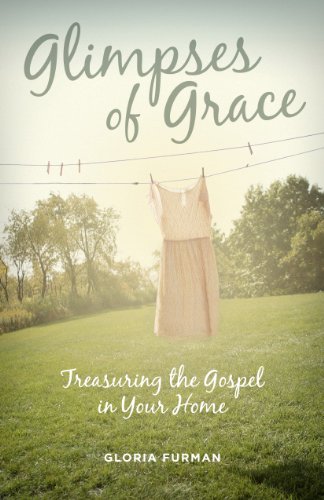
Lately I have been reading the book Glimpses of Grace by Gloria Furman, and I can’t tell you how many times it has brought me to tears. I think the tears kept coming because I was getting a greater vision for treasuring Christ in my home and in my parenting. 

Having two little boys (3yr. and 1yr.), a husband, and a home to care for, I needed to be reminded of the significance that the gospel brings to my ordinary days. I love that as I do my mundane chores and tasks, I can bring God glory and experience real joy.

I was so deeply impacted by this book that I have  invited Gloria to come and share a little bit about her book. I am so excited to share this with you because I hope that you too will meet Jesus as you read her book. I can’t recommend Glimpses of Grace enough!

Here is the interview I had with Gloria.  

What inspired you to write Glimpses of Grace?

My days (and nights) are full of all things “ordinary,” and I struggle to see how the extraordinary gospel of grace intersects and informs my life. I wrote this book because I wanted to remind myself (and others) of the supreme governing reality in our lives when we belong to Jesus—that of being “in Christ” forever. Learning to believe and apply the gospel became very important for me in beginning to understand this—hence the subtitle: treasuring the gospel in your home. 

Who were some of the authors or other theologians that impacted you?

Since seminary I’ve had a fascination with some of the Puritan pastors who have a way with communicating about the supernatural work of God and our ordinary lives. Richard Baxter, Jeremiah Burroughs, John Owen, and Richard Sibbes come to mind. In more contemporary literature, JI Packer, Jerry Bridges, Paul Tripp, John Piper, and Milton Vincent are among those who have impacted me.

How did you balance writing and having a family?

This is a fun question! My family is my primary 24-hour commitment, and after that comes our local church and my neighbors. When life is busy, writing is pretty far down there on the food chain. As a general rule of thumb, my laptop stays closed until the kids are in bed. Otherwise, I find that random Facebook posts of nonsensical words may appear on my timeline because my two-year-old loves technology.

But there are times throughout the days, weeks, and months where I’m able to write in a capacity other than an occasional article here and there. My husband Dave is a great support to me in this, as he sees the great personal benefit that I gain from processing my thoughts verbally (on “paper”).

Tell me a little bit about the writing process? What did that look like? Did you ever face writers block?

Presuming that your question refers to the writing process of the books, they both started as outlines in my head. I tossed around some of the main ideas in various blog posts, and then later developed those thoughts further into chapters. The beautiful thing about working from an outline is that is greatly minimizes writers block. However, I’ve found that trying to force an outline that just isn’t there is where writers block can come into play.

What is your favorite part of the book? / favorite quote?

I think the passages that talk about contentment would be my current favorite, simply because I keep coming back to those lessons over and over again!

How did the Lord encounter you as you studied and wrote the book?

I think the Lord was gracious in revealing to me just how much I need to depend on his Spirit in order to comprehend his word. Although there was a ton of academic work done in preparation and writing of the book, the comprehension of spiritual things had to be by God’s Spirit illumining his word. Another grace I experienced was that as I attempted to write about treasuring the gospel, I became painfully aware of how my heart is divided. My prayer for myself became the same as the psalmist in Psalm 86:11, “Teach me your way, O Lord, that I may walk in your truth; unite my heart to fear your name.”

What have you written? (book, blog, other websites, etc..?)

Glimpses of Grace is my first publication. I’ve written a second book that is explicitly to mothers called Treasuring Christ When Your Hands Are Full (releasing March 2014). I mainly write articles for blogs, and on occasion I find myself contributing to publications about cross-cultural ministry and missions, which is always sheer joy.